
Unity Temple may thus be seen as the decisive formal and conceptual synthesis of Wright’s development as an architect, fusing his philosophical search for the moral meaning of geometry, his struggle to define a generative relationship with architectural history, his endeavours to develop an appropriate American monumentality, and his own sequential design process in which each design is conceived as a variation on an evolving ideal.
Robert McCarter
Essay coming. . . .
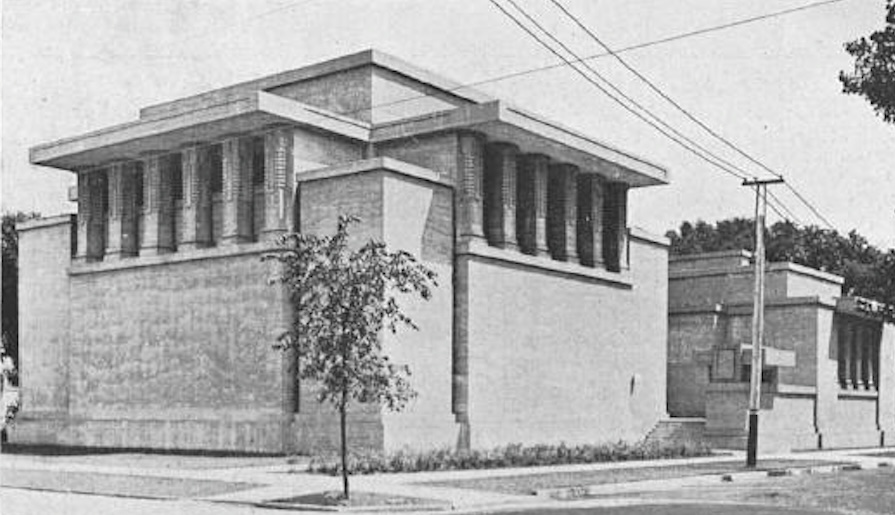
Site
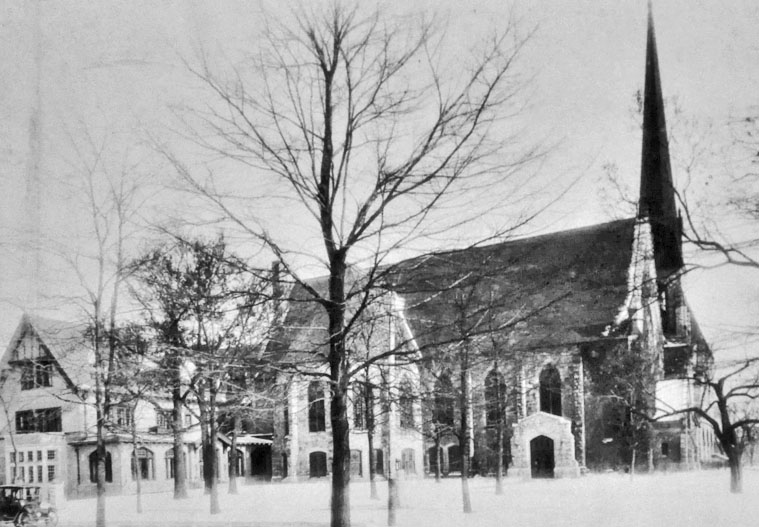
Context

Text

Text
 Text
Text

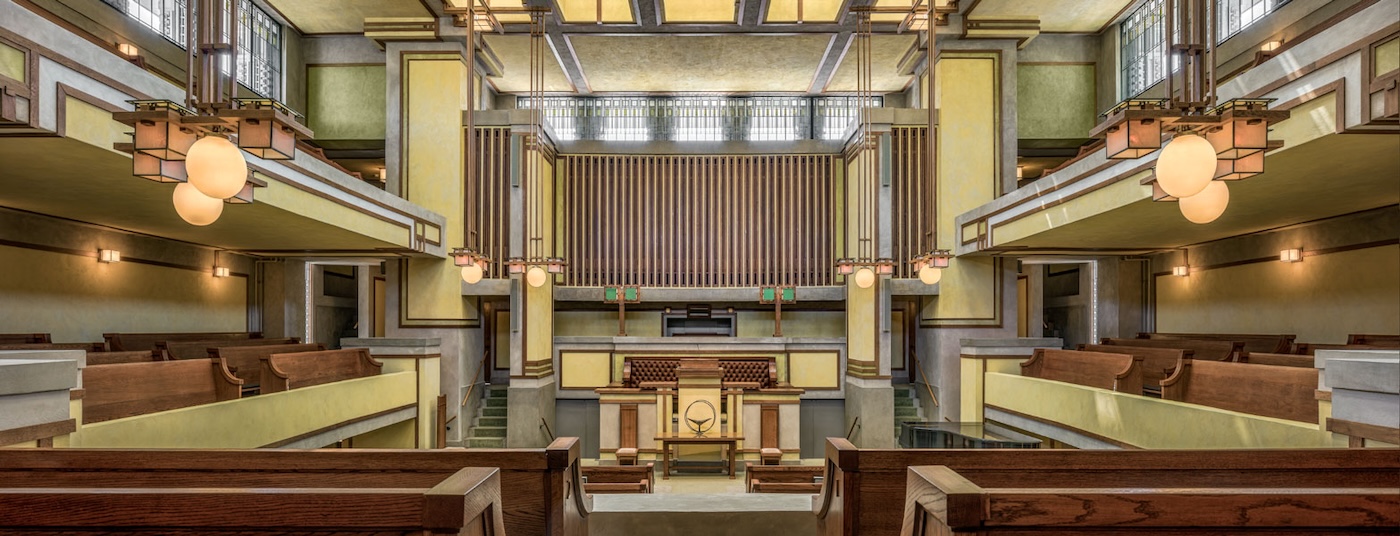
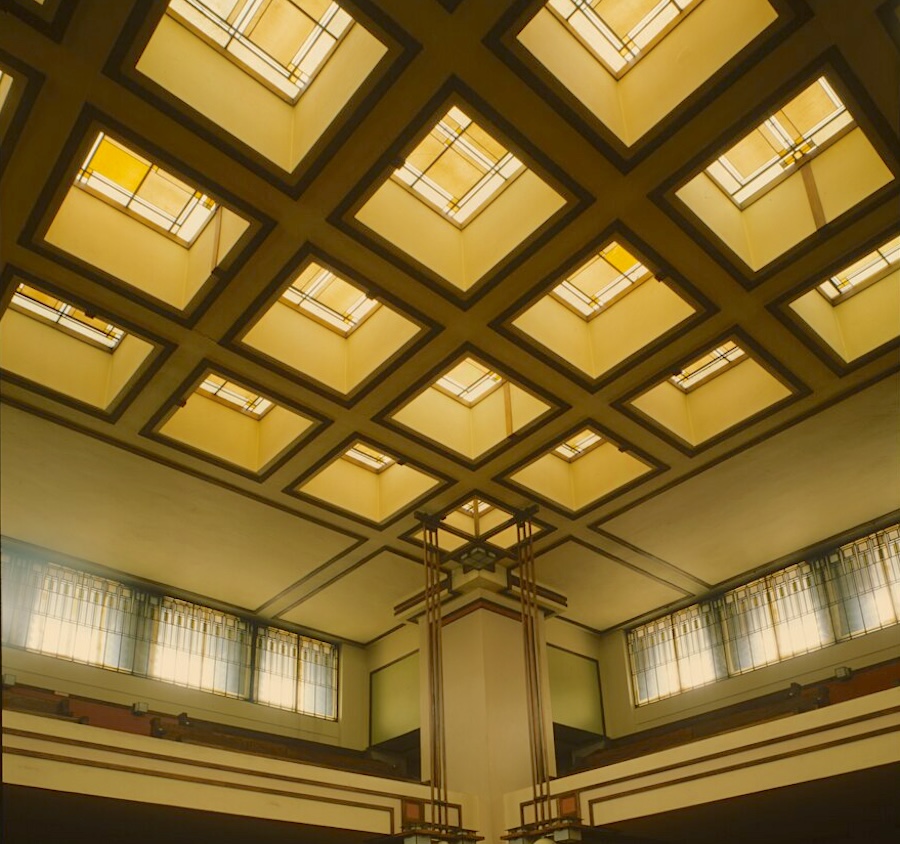
From the scale of the entire room to the hanging lamps, the whole to the parts, we are everywhere aware of square and cubic volumes of all sizes, actual and implied, nested one within the other in a dynamic order, smaller asymmetries interlocking in rich spatial form as they interpenetrate with larger symmetrical volumes.
McCarter again
Text
Text

Text
Text
Text
Text
Text
Text
Text
Text
Text
Text
Text
Text
The mind does not receive everything from abroad. Its great ideas arise from itself, and by those native lights it reads and comprehends the volumes of nature and revelation. The elements of the idea of God we gather from ourselves. Power, wisdom, love, virtue, beauty, and happiness, words which contain all that is glorious in the universe and interesting in our existence, express attributes of the mind, and are understood by us only through consciousness.
William Ellery Channing, “Discourses”

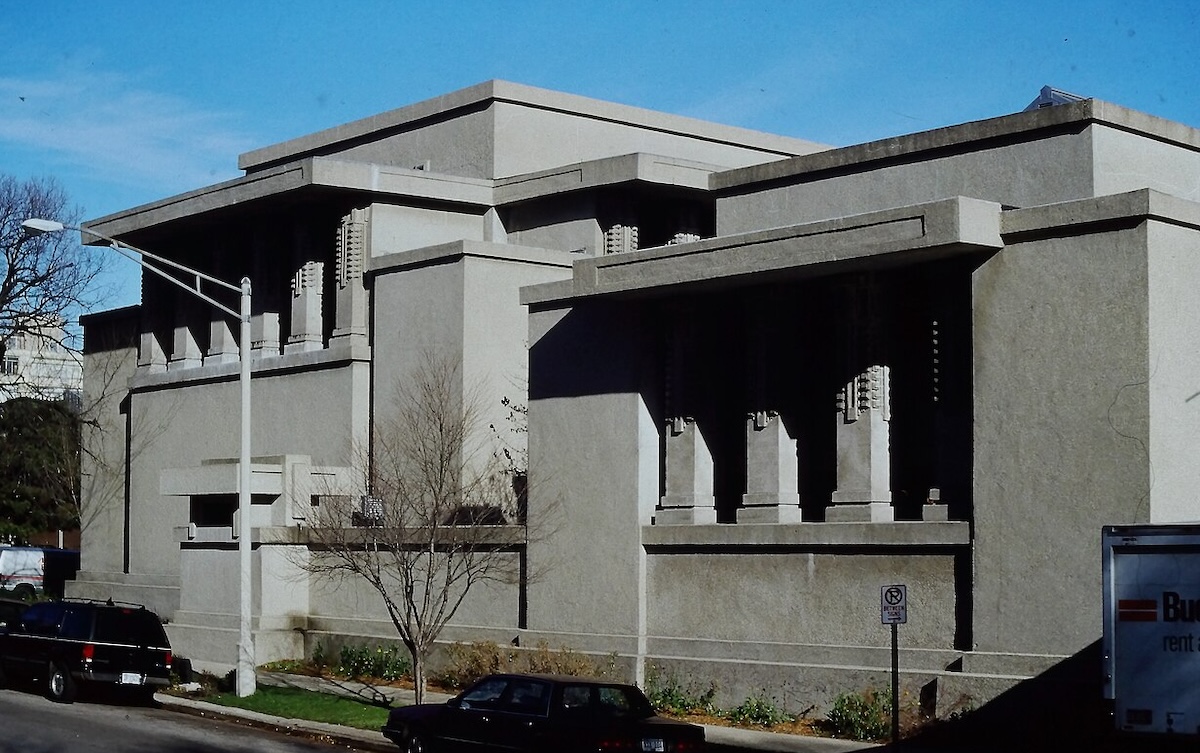
For the struggle to express the inexpressible—to create what Le Corbusier called, in reference to his great chapel at Ronchamp, France, “ineffable space”—is one that has yielded few successful results in our time or in any other. The extraordinary balance between the rational and the irrational that characterizes Ronchamp, or Frank Lloyd Wright’s Unity Temple in Oak Park, Ill., or Louis Kahn’s Unitarian Church in Rochester, N.Y., or Bernard Maybeck’s Christian Science Church in Berkeley, Calif., to name four of the greatest religious structures of this century, is not something that can be made by formula, and it is not something that can be dictated by style.
Paul Goldberger

Text
Reality is spirit . . . essence brooding just behind all aspect! Seize it! And . . . after all, reality is supergeometric.
Wright
.
.
Notes
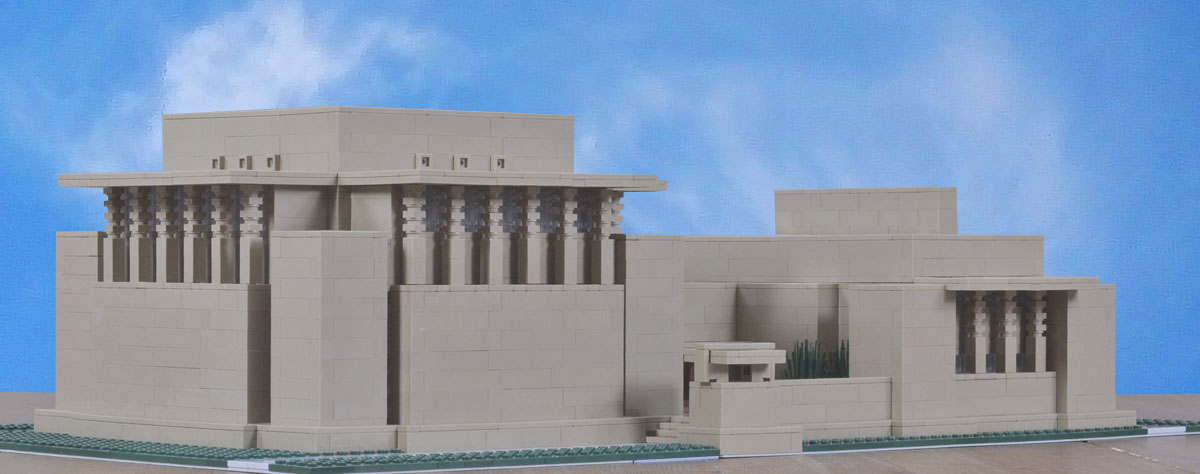
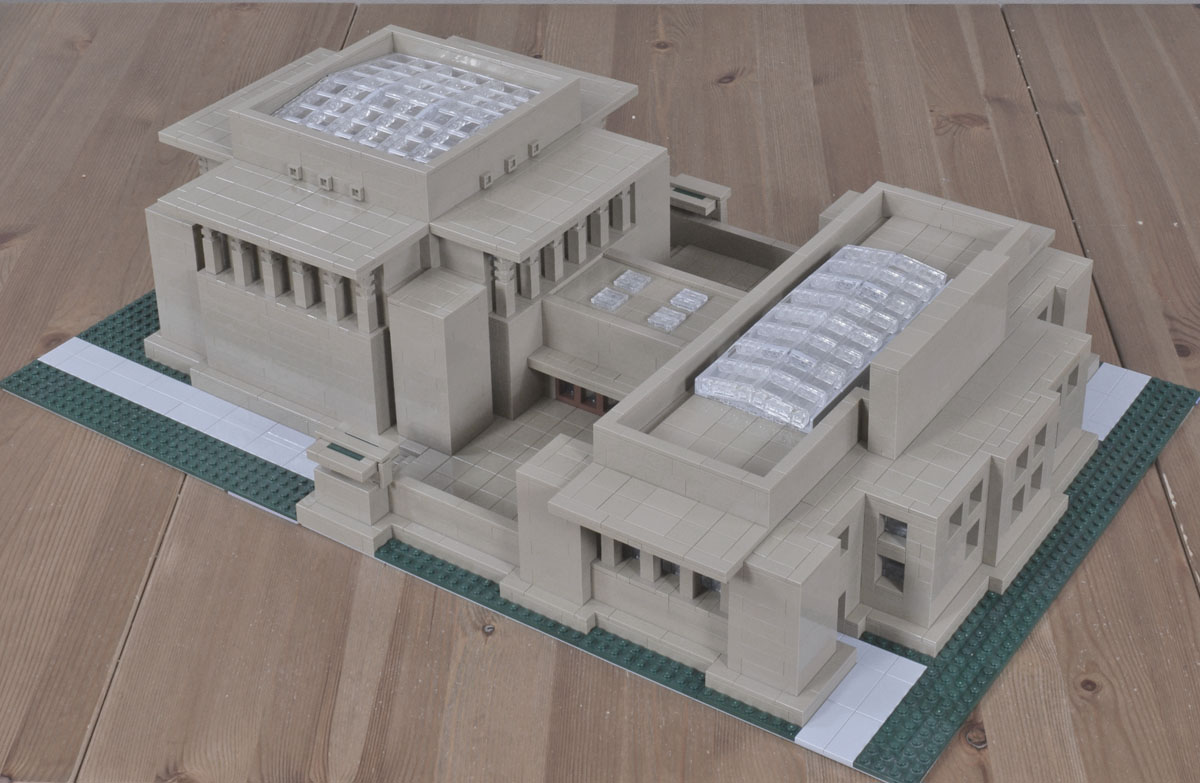
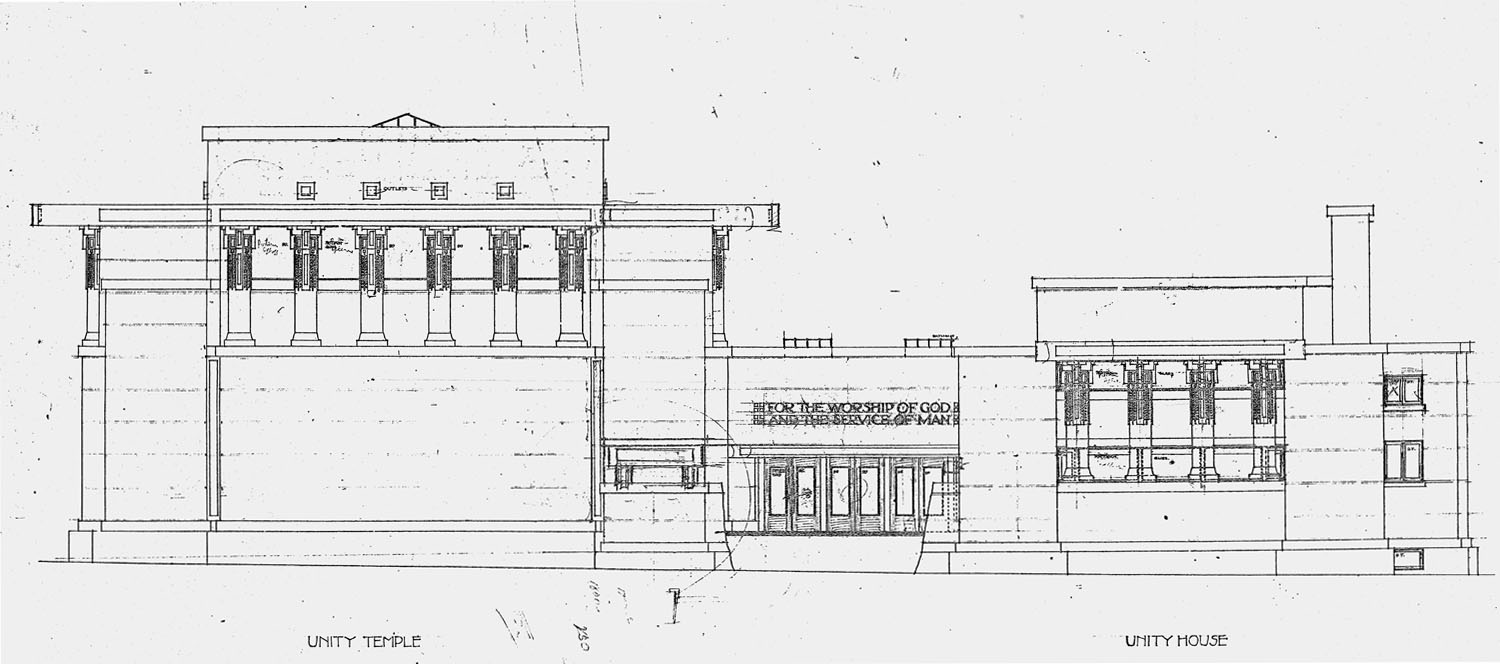
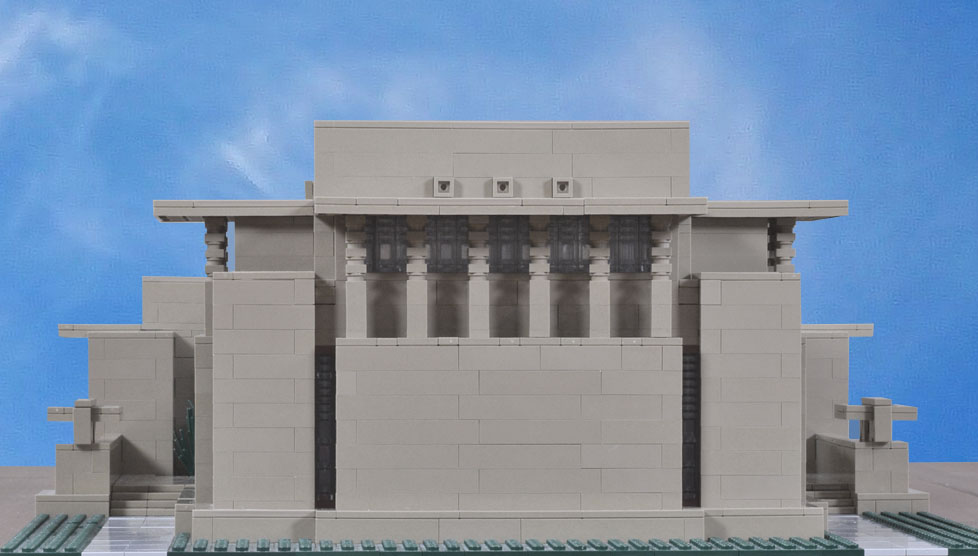
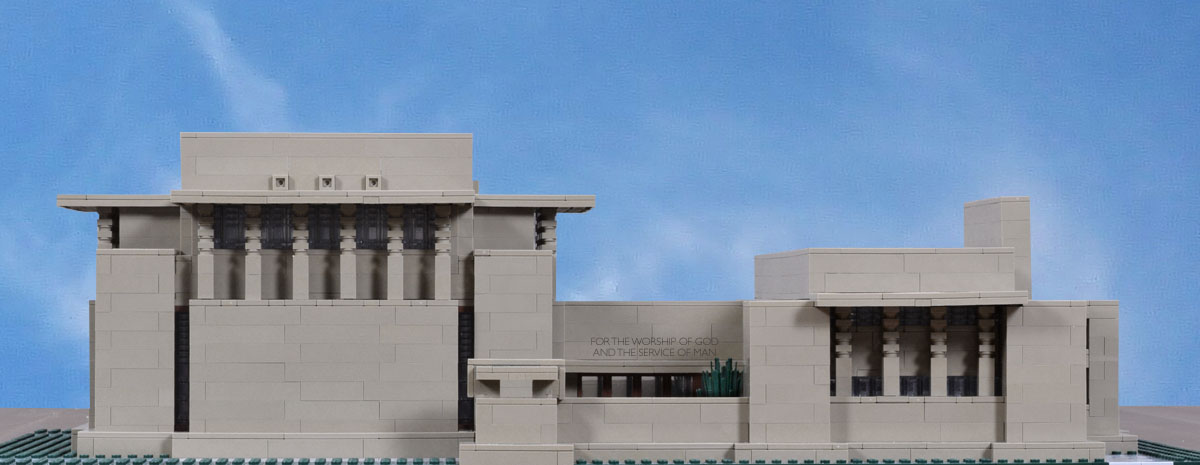
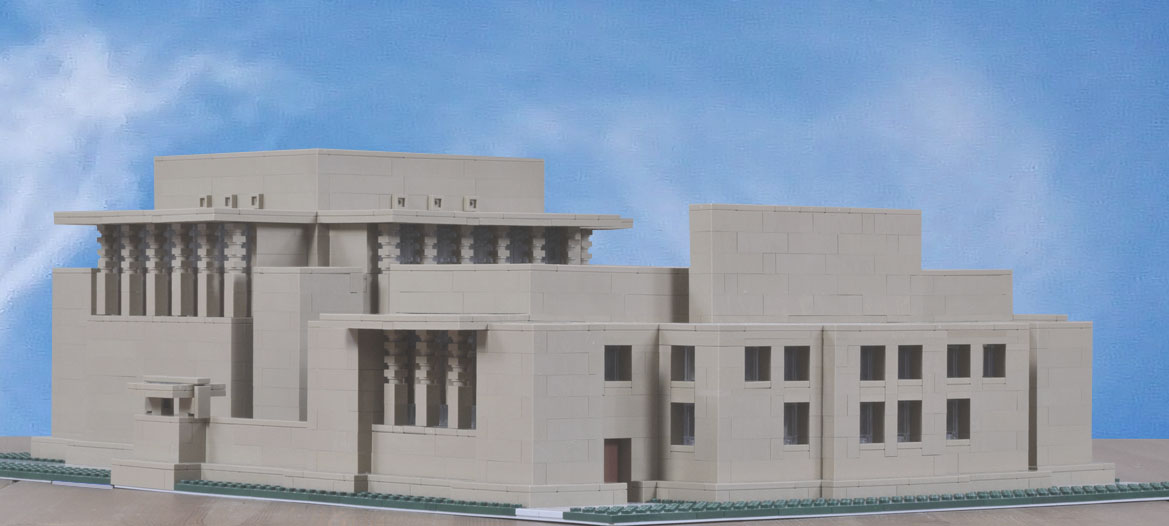
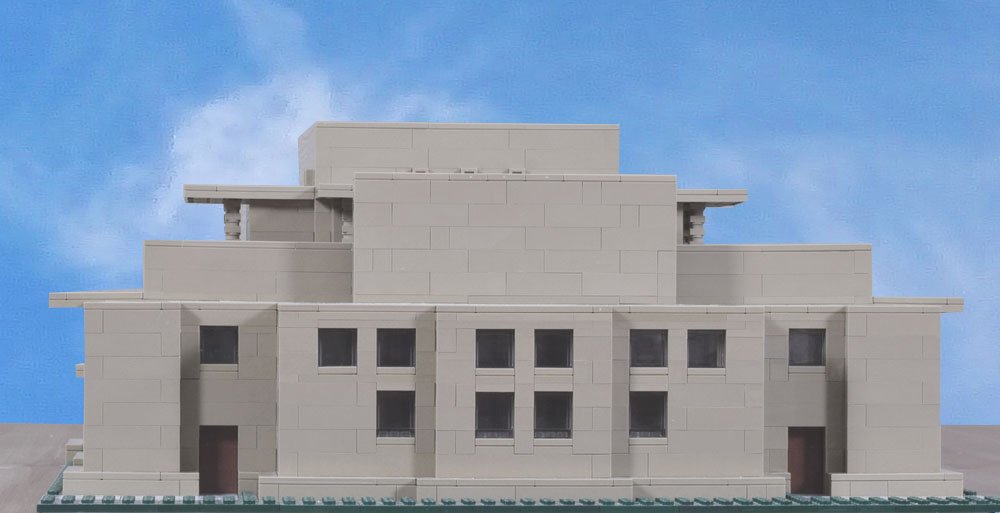
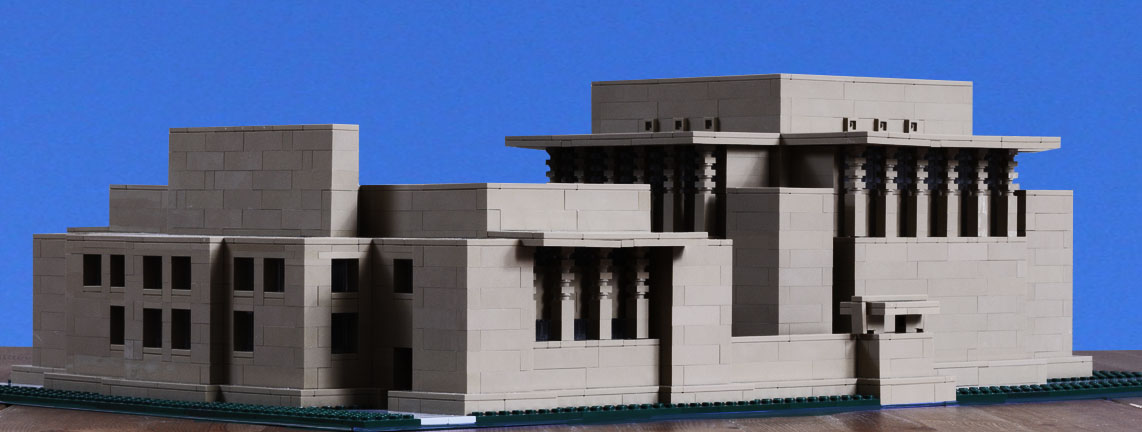
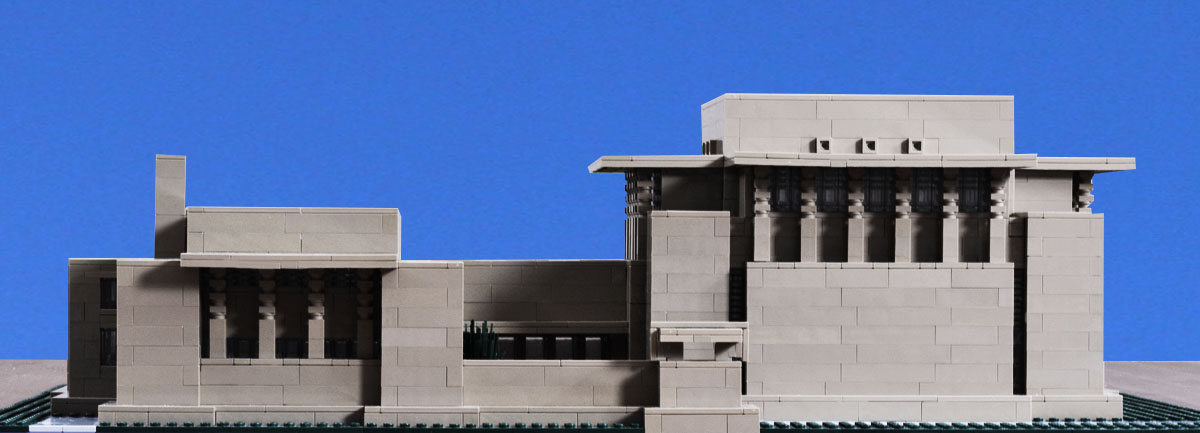
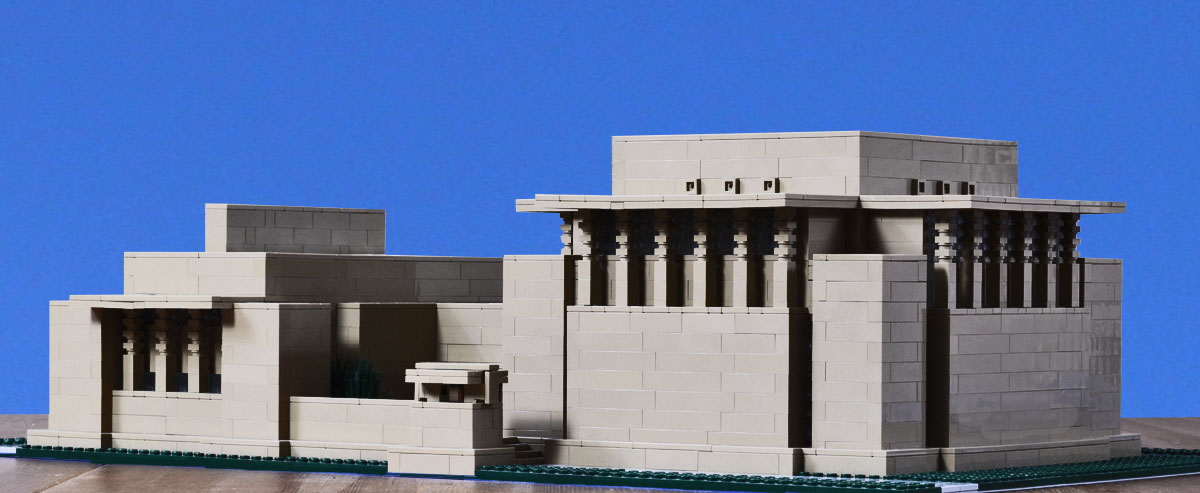
The model captures major elements and their relationship, but proportions are off. What it most misses is the fine articulation at the base and overhangs, which add to the building’s subtlety, complexity, and expression. At this scale, about 1/77, I could only exaggerate it.
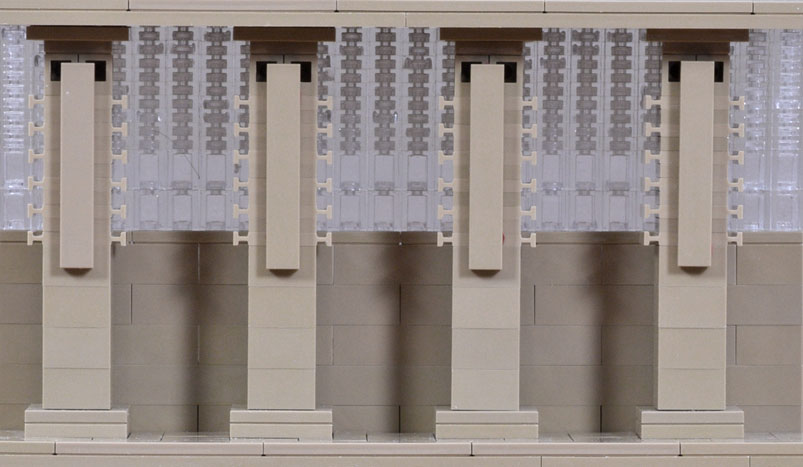
The whole model is based on a 1×1 Lego unit for the columns, its smallest piece. I could have made one based on 2×2 columns, above, which would have allowed more precision and definition. It would also, however, have led to one which would have been twice as a large—and eight times the volume, beyond my means and really my interest. There’s some advantage to having a smaller and more manageable scale. It provides better overall perspective and helps one see the building better in its entirety.
Credits coming. . . .