Out of the depths I have cried to You, O Lord
Lord, hear my voice!
Let Your ears be attentive
To the voice of my supplications.
.


.
The times are bleak, solutions appear beyond us, miracles lie around the corner. We live in an age of bottomless trepidation and unbounded wonder. Each is exhilarating in its own way, both are given equal play without resolution. The two can be related, one feeding the other: the greater our desperation, the greater our projection of hope. There is a kind of exhilaration in utter helplessness that propels us beyond ourselves, to faith. Of late our faith—along with vast computing resources and countless billions—has been invested in artificial intelligence, which we hope will save us, transform us in ways we cannot even fathom.
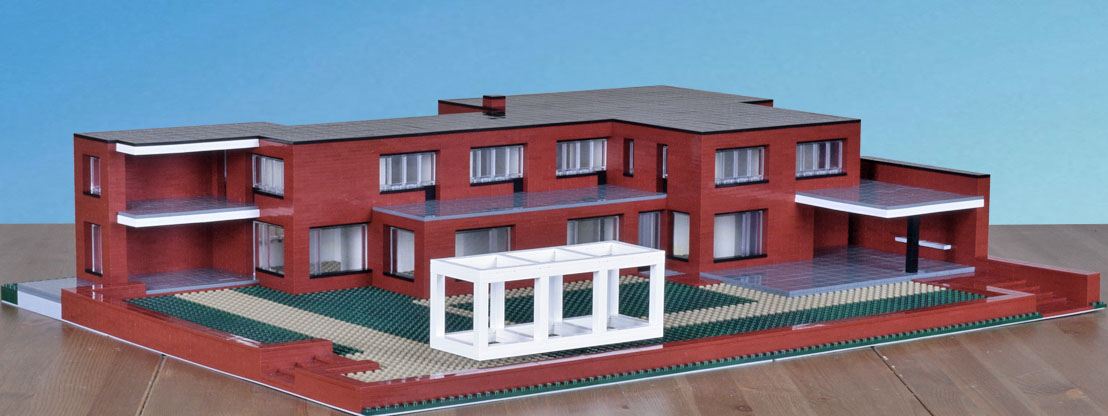
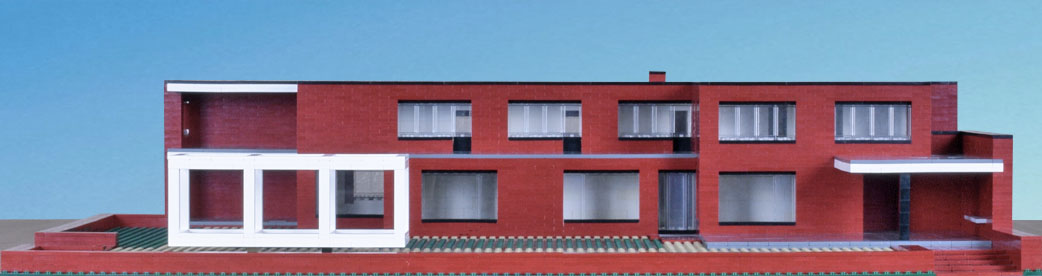
Mies van der Rohe’s Dexel House, commissioned by artist Walter Dexel, 1925, unbuilt, would have been his first modern construction. Not much is known about it and Mies left us almost nothing beyond a handful of quick, rough sketches. For my brief, tentative essay, Mies van der Rohe: Haus Dexel, I built a model based on the first image, above, shown in the second. I wanted to see what AI could do and went to ChatGPT with great anticipation, some fear. I simply entered the prompt “Mies van der Rohe Dexel House” and in seconds got a full, impressive-looking report that ended with this conclusion:
Mies van der Rohe’s Dexel House was a conceptual laboratory—critical stepping stone in his architectural evolution. Though never built, it encapsulates his shift from classical composition to modernist abstraction, from enclosed space to defined space. It is one of the clearest articulations of his exploration into how form, space, and modern life could converge—not through ornament or tradition, but through clarity, geometry, and logic.
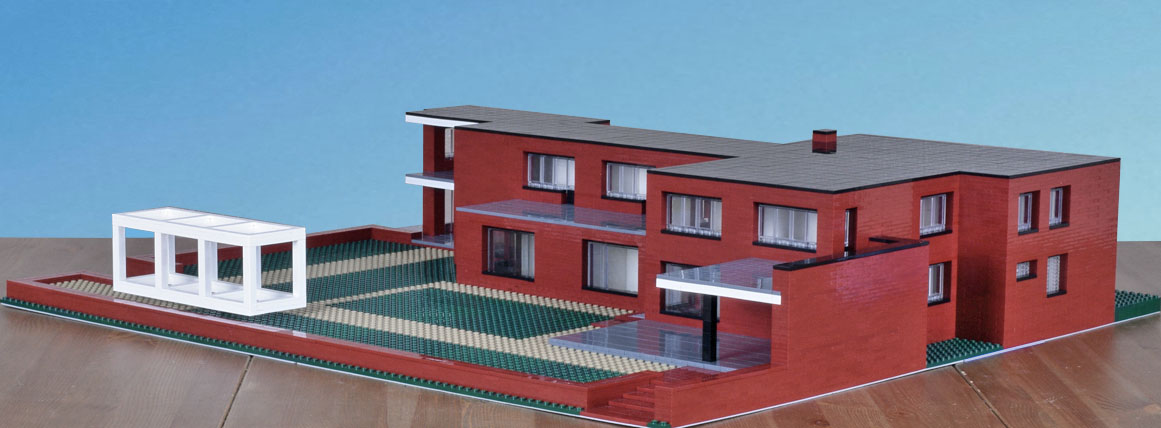
Would you like a diagram showing how the spatial volumes interact in the design?
I said I did, and got the third image. The conclusion, for all its ambition, is wholly abstract, dubious, and borders on nonsense. The drawing fits it well. It makes no sense as a house at all and bears marginal connection to the Dexel House, to anything Mies ever designed or built, to architectural design itself.