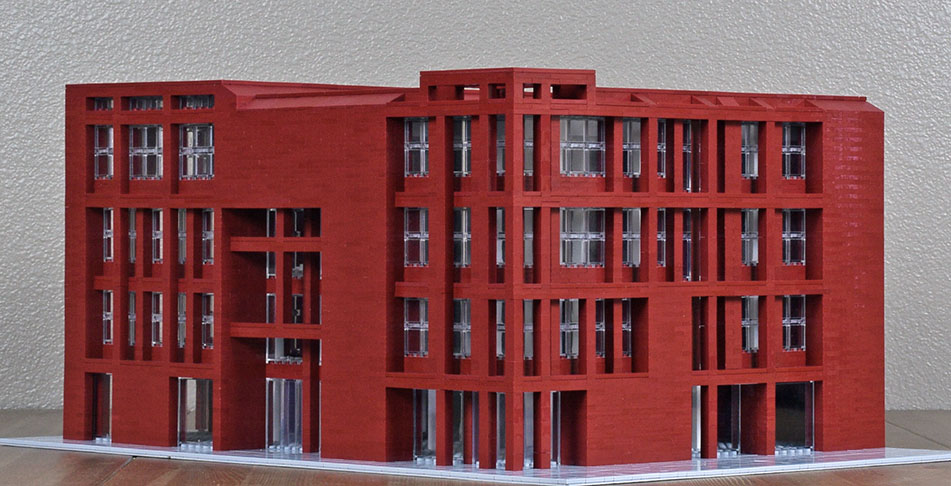
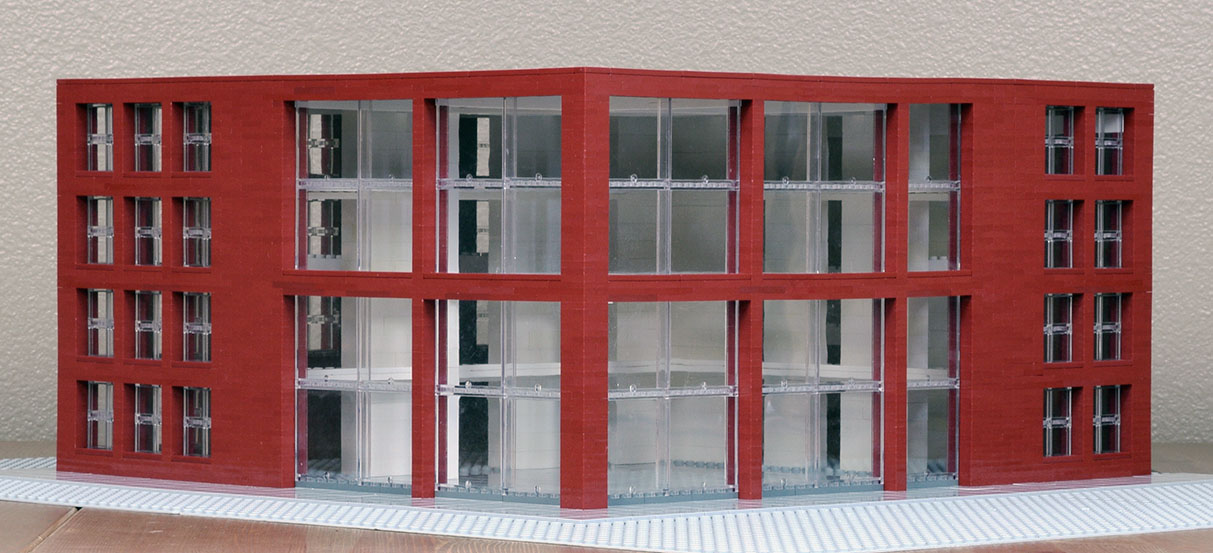
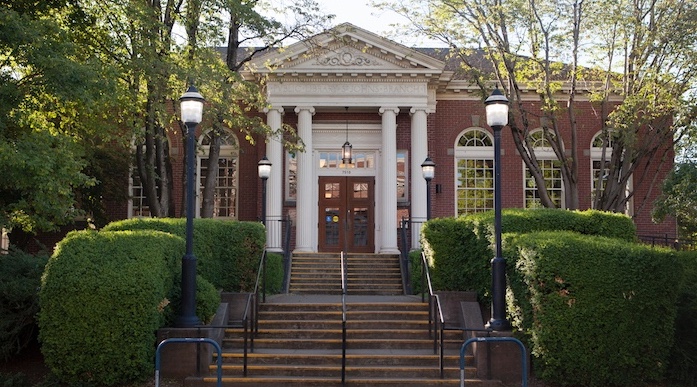
.
Order
Renaissance artists firmly adhered to the Pythagorean concept “All is Number” and, guided by Plato and the neo-Platonists and supported by a long chain of theologians from Augustine onwards, they were convinced of the mathematical and harmonic structure of the universe and all creation. If the laws of harmonic numbers pervade everything from the celestial spheres to the most humble life on earth, then our very souls must conform to this harmony. It is, according to Alberti, an inborn sense that makes us aware of harmony; he maintains, in other words, that the perception of harmony through the senses is possible by virtue of the affinity of our souls. This implies that if a church has been built in accordance with essential mathematical harmonies, we react instinctively; an inner sense tells us, even without rational analysis, when the building we are in partakes of the vital force which lies behind all matter and binds the universe together.
Rudolf Wittkower, Architectural Principles in the Age of Humanism
It was a belief embraced by Palladio, made manifest in his design of villas

public palazzi

and in what was believed the highest form of architecture, the church.

That this order does not fit other conceptions of Christianity, that it doesn’t fit the facts of history, its order, that the order of God might be unknowable, that there are other gods, other religions, or that there may be no god, that the notion of order itself may serve other instincts, that the notion is illusory and self-serving, that it makes no sense—these questions were not asked. When they were, we were left only with numbers, their relationships, and vanishing perspectives.
There is no point in being sentimental here. Still, the well-proportioned buildings remain with their symmetry, their pulsing rhythms, those and the desire that reaches beyond desire, a breathing, an aspiration for what might hold us together and vouchsafe our lives on earth, for that and still for something else.
Continue reading →